

 УКР
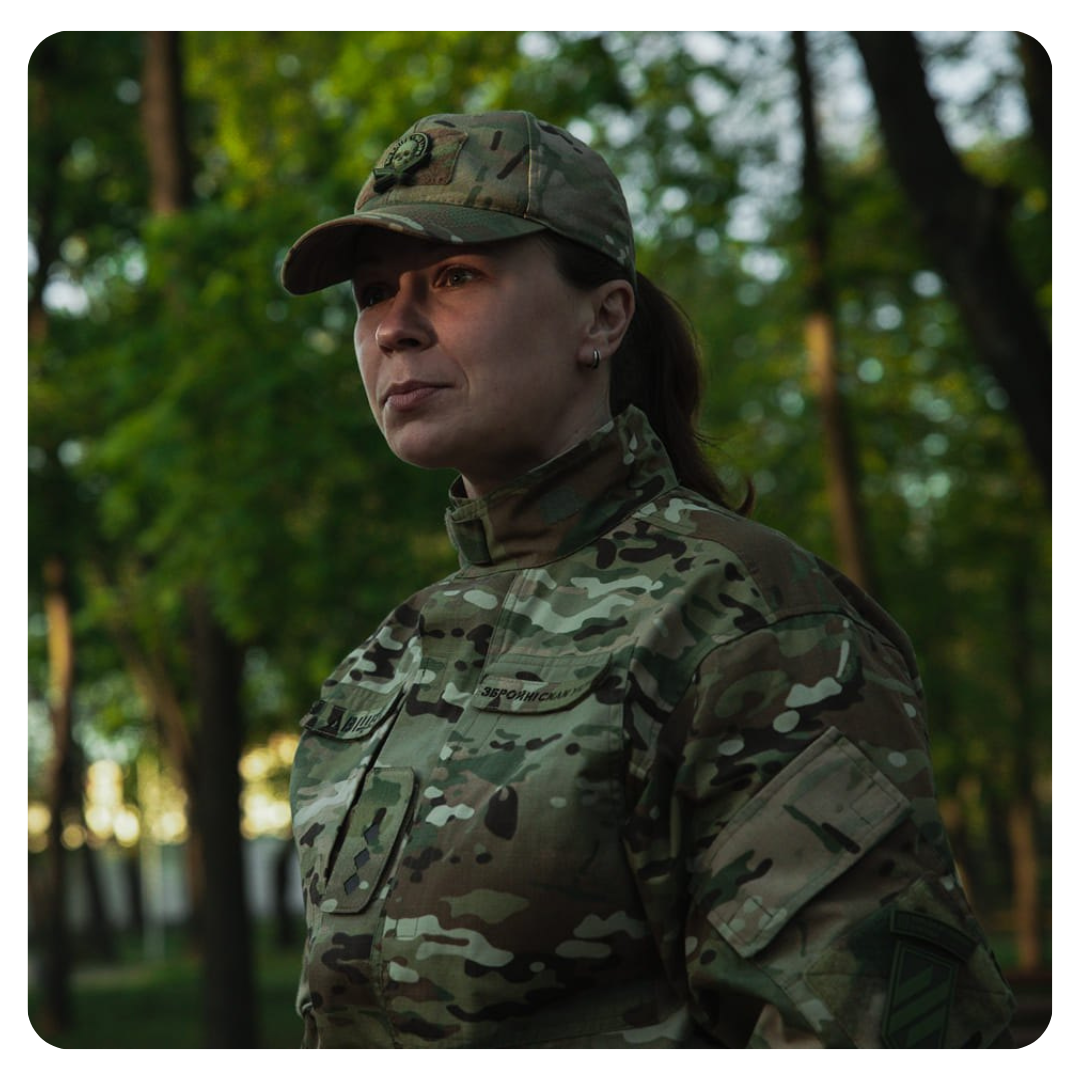
УКР Viktoriia Kovach, call sign “Avicenna,” Chief of Medical Service of the Third Army Corps, once dreamed of becoming an obstetrician-gynecologist. After medical university, she even completed her internship. But her medical career was derailed by… tufted hairgrass. This grass somehow ended up in a dubious domestic medicine that, at one point, was aggressively promoted everywhere, including by top officials in the medical establishment.
“They held entire conferences claiming that this miracle alcohol-based medicine could cure everything! And at some point, that one drop of tufted hairgrass was the last straw for me. I realized I couldn’t tolerate such a system,” Viktoriia recalls.
So she left civilian clinical medicine. Soon after, however, she joined efforts to reform the Ministry of Health, and later became part of the team at a top private clinic. When the full-scale war began, Kovach proved herself to be one of the most effective and recognizable managers in military medicine. That is what our conversation with her was about.
“On February 24, I immediately went to my own people”
On February 24, 2022, Viktoriia was woken up by the brother of her friend, with whom she shared an apartment.
“The war has started,” he said.
“The war started a long time ago,” Viktoriia shot back.

She knew exactly what she was talking about: she had first joined the military back in 2014. She served as a field medic with Azov in the Mariupol sector.
“At the start of the full-scale invasion, I was living in Kyiv and immediately went to my own people—the core of former Azov members. At first, we formed a capable Territorial Defense unit, then it grew into the Azov-Kyiv Special Operations Forces unit. And in the fall of 2022, the Third Separate Assault Brigade was formed as part of the Armed Forces, where I became the brigade’s chief medical officer,” she says.
Her work became largely administrative: she had to quickly learn the bizarre structure known as military medicine.
“I still haven’t figured it all out,” Viktoriia says with an ironic smile.
“People watch the war like a movie without leaving home”
In the Third Army Corps, mobilized soldiers continue to receive additional training after basic military instruction. For example, each soldier receives 40 to 60 hours of tactical medicine training. This is the so-called “adaptation course.”
“If we’re talking specifically about training a combat medic, then it’s a layering of knowledge. After the adaptation course comes CLS training (Combat Life Saver), and then CMC (Combat Medic/Corpsman),” the chief medic explains.
This work is actively supported by the training-assault company and coordinated by the tactical medicine group.
To understand why even the “basics” are critically lacking, Kovach suggests first opening an air raid alert map.
“Just look at how many hours a day air raid alerts last in a given region. And the very people who should be training at that moment are running to shelters, sitting there, then coming back, while instructors try to gather their focus again. And this isn’t only about medicine—it affects all training. So right from the start, people lose a huge amount of information simply because of all this running around,” she says.
She also sees the number and quality of instructors as a separate problem, along with—cherry on top—the overall quality of mobilization. Or more precisely, the lack of motivation among many who end up in training.
In her view, society is overdue for a serious conversation. A conversation with adults—not with people quietly waiting in a corner for all the bad things to end without making any effort themselves.
“Right now, we’ve divided into two groups: some watch the ‘movie’ and are afraid to leave the house, while others have been living in this reality show for years, losing their health and their lives,” she says.
“By the way, I don’t believe that men with three children should automatically receive a deferment from military service. What truly scares me are those who think that giving birth to and raising another human being is easier than serving. Meanwhile, military families often cannot even conceive their first child because there are no leave opportunities and no rotations. That is unfair.”
“The magic of the Third”
Why does everything work a little differently in the Third Army Corps, and why are some of its units able to attract recruits through recruiting rather than coercion? Viktoriia calls it “the magic of the Third.”
Unlike that terrible medicine with tufted hairgrass, this magic has three truly effective components:
- conditions in which soldiers can train safely,
- adequate communication from instructors and commanders,
- clear rules of the game.
“Our instructors are more motivated because they know what all of this is for. Most of them have already been through the battlefield and have real respect from those they teach. New recruits understand that training is not a formality—it is a chance to survive. They are also told clearly and immediately what role will be expected of them, what job they will do, and what happens if circumstances change. We create the safest conditions possible during training and try to work underground as much as possible,” Viktoriia explains.
Kovach strongly believes in balance and common sense. As an example, she cites blood transfusions at the pre-hospital level—something the Third was among the first to practice.
“Blood transfused into a body where the source of bleeding has not been controlled does not save a life in the long run. It is not a panacea. In fact, there is no panacea. There is no ‘one magic step’ or ‘one magic person.’ What saves lives is a system and a sequence of correct decisions,” Viktoriia says.
Overall, the corps constantly tries to create its own solutions—the things that work more effectively. For example, the corps already has:
- a military medical commission system without lines or bureaucracy, allowing a wounded person—or anyone needing a military medical examination—to recover instead of waiting endlessly at a military unit;
- its own blood bank, which simplifies access to blood, logistics, and coordination.
Since its blood bank was created, 618 units of blood have been delivered, and 458 plasma transfusions have been carried out in field conditions.
Despite all the innovations, Viktoriia believes the most important thing others should learn from the corps’ policies is humane treatment of subordinates by commanders. This is reflected in every process, including medicine: the corps operates its own dental services, and its stabilization points are always close to the infantry.
“It’s not fashionable in the army to talk about the heart and joints”
Relatively recently, the corps launched its own analytical center, which gathers an important body of medical data—on post-tourniquet syndrome, the use of medical pouches, and more.
There are many difficulties, such as the lack of retrospective data and the lack of quality data from all units of the corps. But there are also important findings. For example, it is time to acknowledge that chronic diseases significantly affect combat readiness—and that there are simply not enough doctors available to treat them. The army is catastrophically short of physicians because doctors are shielded from mobilization.
“As early as 2024, we calculated that the number of outpatient patients—people without combat trauma—was almost twice the number of the wounded,” Kovach says.
“These are headaches, back pain, joint pain, high blood pressure, and so on. It’s not fashionable to talk about these diseases because it’s not heroic. But imagine a heavy-equipment driver transporting a crew who suddenly has a heart attack. Then anything can happen. The question is not ‘what went wrong,’ but ‘what are we going to do about it?’”
“Doctors need to lose their exemption”
At the beginning of 2025, the government allowed 100% of medical workers in state and municipal healthcare institutions to be exempted from mobilization. In Viktoriia’s view, that decision ignored the needs of the fighting army.

“We have a growing share of older people with chronic diseases, and objectively we need more specialists at least for them. The alternative is that the specialists already in units work two or three times more, and that inevitably affects the quality of care,” she explains.
Asked what should be done, she answers briefly: lift the exemptions.
“Recently I read about a young anesthesiologist born in 1993 who was summoned by the draft office to clarify his data and then detained during the process. During that time, he managed to file a series of complaints and appeals. I do not see the problem with a 32-year-old anesthesiologist joining the army: there is more than enough work in his specialty there,” she says indignantly.
“The ‘golden hour of evacuation’ is a lie we tell ourselves and our commanders”
In Kovach’s view, military medicine is an entire chain of survival. Its weakest link is the battlefield and the delay before the wounded person receives their first real medical contact:
“I mean the period from the moment of injury until the moment when the first medic—whether a medical instructor, doctor, paramedic, or anyone on a medevac team—professionally examines that wound.”
She adds that the battlefield has changed radically even compared with 2022: because of drones, evacuation is consistently long and difficult. In her current position, Viktoriia is able to communicate this bitter reality of Ukrainian experience to foreign colleagues. Yet she feels they are still in a kind of denial.
“They stubbornly say that the ‘golden hour of evacuation’ still has a right to exist. But that would be a lie and incompetence if I wrote it into our planning! More than that, it is a lie to soldiers—to tell them they can be evacuated within an hour. And all I hear in response is the same ‘yes, but…’ There is always that ‘but.’”
The corps is also actively developing the use of ground robotic systems for evacuation of the wounded. According to Kovach, sometimes this is the only chance they have.
“This year, these systems became our ‘leaders’ at the national level both in evacuation of the wounded and in performing logistics tasks. That is inspiring, because it creates a foundation and a chance for the next stages of treatment and saving a soldier’s life.”
“Fighting over the same slice of pie is a bad idea”
Besides personnel, much also comes down to funding. Even progressive, high-profile brigades still rely heavily on benefactors and charitable foundations.
“State funding for military medicine is very low. I cannot name the reason, because I don’t know it,” the officer says.
This creates competition for alternative sources of money and supplies. In itself, competition can stimulate development—but only up to the point where it turns into hunger games.
“There are units competing for the attention of volunteers and donors. The more units appear, the tougher the competition becomes for the same limited resource. In that logic, it is no longer enough simply to receive help—you have to offer something ‘unique’: a video about what you got, a survival story, some dramatic footage of equipment being used. Spectacle, right on the edge of ethics, becomes routine and replaces the real meaning of aid. More and more, it resembles a TV series or a reality show where the level of difficulty keeps rising and everyone says, ‘Wow, they’re surviving.’ That kind of competition is not constructive. Competition over the quality of work is necessary and healthy. But competition for the same slice of pie is not,” Viktoriia says.
“Learn how to apply a tourniquet and build a fire”
Although a major part of her life has been spent in the military, Viktoriia can clearly imagine her future outside it.
“In that life there will be a house, fruit trees, rabbits, a library, and remote work. And I would also like to pass on knowledge. Everything we have gained here—through tremendous effort, experience, losses, and difficult decisions—must be passed on. Because the war will not truly end. Even if it freezes, the next generations will still have to fight Russia. It is critically important that they do not repeat our mistakes,” she says.
And not repeating mistakes means having a population fully prepared for defense.
“Right now, we are definitely not ready. First of all, morally,” Kovach says.
That is why she urges people to invest as much as possible in teaching themselves and their children. And this is not only about academic education. It is also about knowing how to build a fire, refuel a generator, apply a tourniquet, and coordinate with your neighbors.